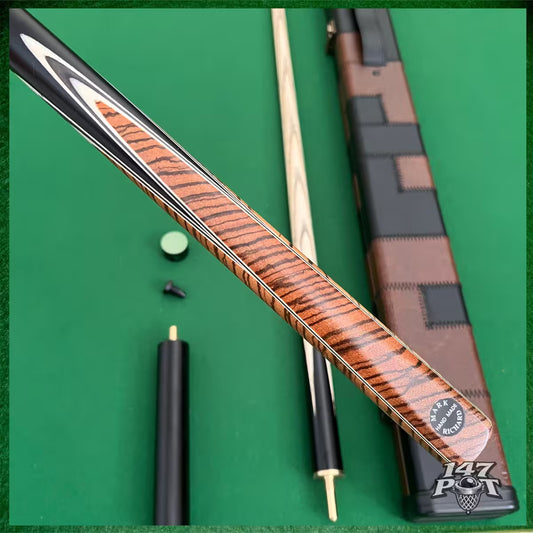
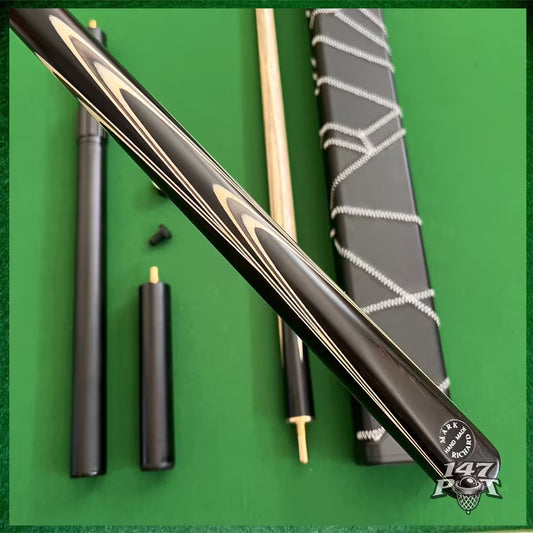
How to Choose the Right Snooker Cue
📖 15 min read • Updated: 8 August 2026
Introduction
Choosing a snooker cue is one of the most important equipment decisions a player will make. Whether you are buying your first cue or replacing one you have used for years, there is rarely a single 'perfect' specification that suits everyone. Comfort, confidence, technique and personal preference all play a significant role.
Many players begin by looking at the appearance of a cue or its price, but experienced players know these are only small parts of the decision. The type of wood, construction, balance, weight distribution, shaft characteristics and tip size all contribute to how a cue feels during play. Even two cues built to identical specifications can feel noticeably different because timber is a natural material.
This guide explains the factors that genuinely influence playability, helping you make an informed decision before investing in a new snooker cue.
In This Guide
- Quick Recommendations
- How Do I Choose a Snooker Cue?
- One-piece vs 3/4 Jointed Snooker Cue: Which Is Better?
- Ash vs Maple Snooker Cues: What's the Difference?
- Does an Expensive Cue Play Better?
- What Is the Best Snooker Cue Tip Size?
- What Weight Snooker Cue Should I Buy?
- What Length Snooker Cue Do I Need?
- Understanding Snooker Cue Balance
- Understanding Snooker Cue Shaft Characteristics
- Why Every Snooker Cue Feels Different
- Understanding Cue Deflection
- Common Misconceptions When Buying a Snooker Cue
- Frequently Asked Questions About Snooker Cues
- Conclusion
Quick Recommendations
If you’re unsure where to start:
- Length: 58”
- Weight: 18–19oz
- Tip: 9.5mm
- Wood: Ash
- Construction: 3/4 Jointed
These specifications suit the majority of adult snooker players. As you gain experience, you may decide to fine-tune your preferences.
How Do I Choose a Snooker Cue?
The best way to choose a snooker cue is to start with comfort rather than price. Ask yourself:
- What standard of player am I?
- Will I mainly play snooker or English pool?
- Do I need a cue that is easy to transport?
- Do I already know my preferred weight or tip size?
For most players, a cue around 58 inches long, weighing between 18 and 19 ounces with a tip around 9.5 mm provides an excellent starting point. These specifications have become popular because they provide a good balance of cue-ball control, spin and power without feeling extreme.
If you already own a cue that you enjoy using, measure its weight, length and tip size before shopping for a replacement. This gives you a useful reference point, although it is worth remembering that two cues with the same measurements may still feel different.
147Pot Tip: If you’re buying your first snooker cue, don’t try to find the ‘perfect’ specification straight away. A cue around 58 inches long, weighing 18–19 ounces with a 9.5mm tip will suit most adult players and gives you an excellent foundation as your preferences develop.
One-piece vs 3/4 Jointed Snooker Cue: Which Is Better?
One-piece cues remain popular with many traditional players because they provide a continuous shaft and are often associated with a very solid feel. However, a well-made 3/4 jointed cue can play every bit as well while being far easier to transport and store.
For most players, the decision comes down to practicality. If you regularly travel to leagues, tournaments or clubs, a 3/4 jointed cue is usually the most convenient option. If your cue rarely leaves the club or home, a one-piece cue may suit your preferences equally well.
Neither design is automatically more accurate or better performing. Quality of construction and how comfortable the cue feels are far more important than where the joint is located.
147Pot Tip: If you regularly travel to clubs, leagues or competitions, a 3/4 jointed cue is usually the most practical choice. Modern 3/4 jointed cues can offer the same level of performance as a one-piece cue while being much easier to transport and store.
Ash vs Maple Snooker Cues: What's the Difference?
Ash has long been the traditional choice for snooker cues. The visible grain provides a natural visual reference that many players use during cueing and aiming. For those who have always played with ash, this distinctive grain becomes part of their routine.
Maple offers a smoother appearance with little visible grain. Some players find this cleaner look less distracting, while others miss the visual reference provided by ash.
Neither timber is objectively superior. Both can produce excellent cues when carefully selected and crafted. The right choice comes down to personal preference, feel and confidence.
147Pot Tip: If you’re unsure which wood to choose, ash is the traditional choice for snooker and remains the most popular because many players use the visible grain as an aiming reference. However, if you prefer a cleaner appearance, maple may suit your style better.
Understanding the “Arrows” in Ash
One of the distinctive features of an ash snooker cue is its visible grain pattern. As the grain runs down the shaft, it often forms repeated V-shaped or chevron-like markings commonly referred to as “arrows.”
Many players use these arrows as a visual reference when addressing the cue ball. The grain can help the player see whether the cue is sitting square and moving consistently along the intended line during the stroke. For some players, this makes ash feel easier to align and gives an added sense of direction.
It is important to remember that the arrows are mainly a visual characteristic, not a guarantee of better performance. A cue with very attractive, even arrows does not automatically play better than one with a less striking grain pattern. Shaft density, strength, balance and overall construction are far more important to how the cue actually feels and performs.
Players who have used ash cues for many years often become accustomed to using the grain as part of their aiming routine, while others may find the pattern distracting. This is one of the main reasons why the choice between ash and maple snooker cues ultimately comes down to personal preference.
Does an Expensive Cue Play Better?
Price does not guarantee better performance. A carefully made mid-range cue can easily outperform a much more expensive cue if it suits the player's technique. Stephen Hendry famously bought a £40 cue and won seven World Championship Titles with it, proving that price alone does not determine performance.
Higher-priced cues often reflect factors such as premium timber selection, decorative craftsmanship, rare veneers or more selective shaft grading. These features may improve appearance and consistency, but they do not automatically improve your cueing.
When comparing cues, pay attention to overall craftsmanship, straightness, balance and how the cue feels in your bridge hand. At 147Pot, ranges including Mark Richard Cues are selected for quality construction and consistent craftsmanship, allowing players to choose based on suitability rather than marketing claims.
Ultimately, the best cue is the one that gives you confidence every time you address the cue ball.
What Is the Best Snooker Cue Tip Size?
One of the first specifications players notice is the cue tip. Although a difference of a few tenths of a millimetre may sound significant, in practice it is extremely small. For most players, choosing an appropriate range is more important than chasing an exact measurement.
A tip in the range between 9.25 mm and 9.75 mm is the most common choice for snooker, with around 9.5 mm proving a comfortable starting point for many players. This size offers an effective balance between cue-ball control, spin generation and forgiveness.
Smaller tips, generally below 9 mm, can generate precise contact but tend to punish inaccurate cueing and are more commonly associated with English pool. Larger tips around 10 mm can feel more forgiving to some players but may reduce the ease with which side spin is applied. Neither extreme is inherently wrong, but they suit different preferences and techniques.
The important point is that tip size should complement your cueing style rather than follow a trend.
| Tip Size | Best For | What to Expect |
|---|---|---|
| Under 9.0mm | English Pool or players who prefer a very fine tip | Maximum precision and spin potential, but less forgiving. Generally not recommended for most snooker players. |
| 9.0–9.3mm | Experienced snooker players | Offers excellent cue-ball control and spin but requires a high level of consistent cue action to get the best results. |
| 9.4–9.6mm ⭐ | Most popular choice for snooker players | The most popular range. Provides an excellent balance of power, accuracy, spin, control and forgiveness. A great choice for beginners through to advanced players. |
| 9.7–10.5mm | Players who prefer a slightly larger contact area | Can feel more forgiving and confidence-inspiring while still offering good cue-ball control. Applying extreme side may require a little more adjustment. |
| Over 10.5mm | Specialist preferences | Uncommon in snooker. Offers a larger contact area but generally reduces the ease of applying side spin compared with smaller tip sizes. |
147Pot Tip: For the majority of snooker players, a tip between 9.4mm and 9.6mm offers the best all-round performance, which is why 9.5mm has become the most popular tip size. Remember that 0.1mm is approximately the thickness of a sheet of paper, so don’t worry about finding an exact measurement—choosing a cue that feels comfortable and suits your technique is far more important.
What Weight Snooker Cue Should I Buy?
Weight is one of the most personal aspects of choosing a snooker cue. There is no universally 'best' weight because every player develops a different rhythm and feel.
Most snooker cues fall between 18 and 19 ounces. Players looking for a balance of touch and power often choose cues around 18 to 18.5 ounces, while those who prefer a little more presence in the hand may gravitate towards 18.5 to 19 ounces.
Lighter cues can encourage a smoother, more delicate cue action but may require slightly more effort when playing long power shots. Heavier cues can produce effortless power, although some players feel they sacrifice a little touch around the table.
If you are buying your first cue, staying within the popular 18–19 ounces range is a sensible place to begin. As your experience develops, you may discover a personal preference.
| Cue Weight | Best For | What to Expect |
|---|---|---|
| Under 17.5oz | Players who prefer an exceptionally light cue or primarily play English Pool | Offers excellent manoeuvrability and touch but may lack the natural power and stability that most snooker players prefer. |
| 17.5–18.5oz ⭐ | Most popular with snooker players | The most popular weight range. Provides an excellent balance of cue-ball control, feel and power, making it suitable for beginners through to experienced players. |
| 18.5–19.5oz ⭐ | Popular with players who prefer a slightly heavier cue with a solid feel | Makes generating power easier while maintaining good control. Many players enjoy the added weight, although some find it reduces delicate touch on softer shots. |
| Over 19.5oz | Specialist preferences | Less common in modern snooker. Provides maximum weight and stability but may feel less responsive for positional play and finesse shots. |
147Pot Tip: For most players, a cue weighing 18 to 19 ounces offers the best balance of control, feel and power, making it the most popular choice for snooker. Remember that 0.5oz weighs less than a standard block of snooker chalk, so don’t worry about finding an exact weight. A cue that feels comfortable, balanced and suits your cueing action will always be more important than a small difference on the scales.
What Length Snooker Cue Do I Need?
Length influences comfort far more than many players realise. A cue that is too short can restrict your cue action, while one that is excessively long may simply feel awkward.
A standard 58-inch cue suits the majority of adult players. Shorter players may feel more comfortable with a 57-inch cue, while taller players sometimes prefer 59 inches or longer. However, height alone should never determine your choice.
Your stance, bridge length and where you naturally hold the cue all contribute to the ideal length. When addressing the cue ball, you should be able to deliver a smooth, relaxed follow-through without gripping right at the end of the butt.
Comfort and natural cueing are more important than matching a chart exactly.
| Cue Length | Best For | What to Expect |
|---|---|---|
| Under 57” | Junior players or adults under approximately 5’6” | Easier to control for smaller players but can restrict cueing action for most adults, particularly on long power shots. |
| 57–58” ⭐ | Most snooker players | The most popular length range. Offers an excellent balance of comfort, cueing action and control for the majority of adult players. |
| 58–59” | Taller players (approximately 5’10” and above) or those with a longer cue action | Provides extra reach and allows a more relaxed stance without gripping the cue at the very end. Popular with many experienced players. |
| Over 59” | Very tall players or those requiring a custom cue length | Offers additional reach and comfort for players over 6’2” or those with an extended cueing action. Generally considered a specialist option. |
147Pot Tip: A 58-inch snooker cue is the most common choice and suits the majority of adult players. However, your stance, bridge length and cueing technique are often more important than your height alone. The ideal cue should allow you to deliver a smooth, relaxed stroke while leaving around 1–2 inches of cue behind your grip hand, giving you room to extend your cue action on longer shots.
Understanding Snooker Cue Balance
Two cues of identical weight can feel completely different because of their balance point. This is where the cue naturally balances when supported horizontally.
Some players enjoy a slightly rear-weighted feel because it gives greater awareness of the butt during the stroke. Others prefer a more evenly balanced or slightly forward-balanced cue that feels steadier through the bridge hand.
Neither approach is objectively better. The balance that feels comfortable and repeatable during your cue action is the one worth choosing.
| Balance | Feels Like | Best For |
|---|---|---|
| Rear Weighted | More weight in grip hand | Players who like feedback |
| Neutral | Even balance | Most players |
| Forward Weighted | More weight towards bridge | Players who like stability |
147Pot Tip: Don’t judge a cue by its weight alone. Two cues weighing exactly the same can feel completely different because of their balance point. If possible, compare several cues with similar specifications before deciding which feels most natural.
Understanding Snooker Cue Shaft Characteristics
The shaft is often the most influential part of a snooker cue. Factors such as density, stiffness, strength and natural flexibility contribute to how the cue transmits feedback.
Dense, well-selected shafts often provide a more solid strike, while carefully balanced flexibility can help produce a lively, controlled response. The visible grain of ash contributes to appearance and, for many players, serves as a useful alignment reference, but grain alone does not determine how well a cue plays.
Every piece of timber is unique. This natural variation is why experienced cue makers carefully select and grade wood before it becomes part of a finished cue. At 147Pot, ranges including Mark Richard Cues are chosen with this emphasis on craftsmanship and consistency.
Why Every Snooker Cue Feels Different
Many players assume that two cues built to the same weight, length and tip size will perform identically. In reality, every cue is unique because wood is a natural material. Differences in density, grain, moisture content and weight distribution all influence how a cue feels during the stroke.
This explains why replacing a long-serving cue can be surprisingly difficult. Even if the specifications match perfectly on paper, the balance, feedback and response may still feel unfamiliar. Rather than expecting instant results, allow yourself time to adapt to any new cue. As you become familiar with its characteristics, your confidence and consistency will usually improve.
147Pot Tip: If your new cue doesn’t feel perfect immediately, don’t be discouraged. Even experienced players often need several practice sessions before they fully adapt to a new cue’s balance and response.
Understanding Cue Deflection
Cue deflection refers to the small change in the cue ball's path when side spin is applied. Every cue produces some degree of deflection and experienced players naturally learn to compensate for it over time.
The amount of deflection is influenced by a combination of shaft characteristics, construction and technique. It should not be viewed as the defining measure of a cue's quality. Instead, consistency is more important. A cue that responds predictably allows you to build confidence because you know how it will react when applying side spin.
When changing cues, one of the biggest adjustments is often becoming familiar with how the new cue responds rather than changing your overall technique.
Common Misconceptions When Buying a Snooker Cue
- The most expensive cue is not automatically the best cue.
- Professional specifications are not always ideal for every player.
- A difference of a few tenths of a millimetre in tip size is rarely noticeable on its own.
- Two cues with identical specifications can still feel very different.
- Decorative veneers and exotic woods may increase visual appeal without changing how a cue plays.
Understanding these points helps players focus on the factors that genuinely influence comfort and performance.
147Pot Tip: Focus on finding a cue that suits your own technique rather than copying another player’s specifications. Comfort, consistency and confidence will always have a greater impact than matching a professional player’s cue.
Frequently Asked Questions About Snooker Cues
How do I choose a snooker cue?
Start with comfortable, proven specifications and choose a cue that feels balanced and natural in your hands.
What is the best snooker cue weight?
Most players are well served by a cue between 18 and 19 ounces, although personal preference should always guide the final decision.
What is the best snooker cue tip size?
Around 9.5 mm is a popular starting point because it balances control, spin and forgiveness.
Should I choose ash or maple?
Ash offers visible grain that many players use as an aiming reference, while maple provides a cleaner appearance. Both are excellent when properly selected.
Should I buy a one-piece or 3/4 jointed cue?
Choose the option that best suits your lifestyle and ease of transporting and storing – a 3/4 jointed cue offers greater all-round flexibility. A quality cue can perform exceptionally well in either construction.
Does an expensive cue play better?
Not necessarily. Craftsmanship, wood selection and how the cue suits your technique are more important than price alone.
What length snooker cue do I need?
A 58-inch cue suits most adult players, but your stance, bridge length and comfort are more important than height by itself.
Can I use the same cue for Snooker and English Pool?
While you can use the same cue for both games, many players prefer different specifications. Snooker cues typically have tips between 9 and 10mm, while English pool cues often use smaller tips for more precise cue-ball control. If you regularly play both disciplines, choose the cue that best suits the game you play most often.
How long should a snooker cue last?
A quality snooker cue can last for decades if it is properly cared for. Regular tip maintenance, storing the cue in a case and avoiding excessive heat or moisture will help preserve both the wood and the cue’s playing characteristics.
Can beginners use a professional snooker cue?
Yes. There is no reason a beginner cannot use a high-quality cue. However, professional specifications are not always the best choice for every player. Most beginners will benefit more from choosing a cue with comfortable, well-balanced specifications than trying to copy a professional player’s setup.
Does the grain on an ash cue affect performance?
The visible grain, often called the arrows, is mainly a visual feature. Many players use it as an aiming reference, but the appearance of the grain does not determine how well a cue plays. Factors such as shaft quality, balance and construction have a much greater influence on performance.
Can two identically specified snooker cues feel different?
Yes. Because wood is a natural material, no two cues are exactly the same. Even cues with identical weight, length and tip size can differ slightly in balance, stiffness and feedback, which is why experienced players often choose a cue based on feel rather than specifications alone.
Should I choose a heavier cue to generate more power?
Not necessarily. A slightly heavier cue can make power shots feel easier, but good cueing technique is far more important than cue weight. Most players find that a cue between 18 and 19 ounces provides an excellent balance of control and power.
How often should I replace my cue tip?
There is no fixed schedule. Replace the tip when it becomes too thin, loses its shape, becomes excessively hard or no longer holds chalk effectively. With regular maintenance, many cue tips can provide months or even years of reliable play.
Should I buy my cue online or in person?
Both options can work well. Buying in person allows you to handle several cues before making a decision, while buying from a specialist retailer gives you access to a wider range of specifications. Choosing a reputable retailer that provides detailed product information and quality cues is often more important than where you buy.
What accessories should I buy with my first snooker cue?
A cue case is the most important accessory because it protects your cue during storage and transport. Chalk is another essential to ensure clean ball striking and reduce mis-cueing. Many players also choose a cue towel, tip shaper, cue tip scuffer and cue extensions as they gain experience.
Conclusion
Choosing a snooker cue is ultimately about finding equipment that complements your own game. Specifications such as weight, tip size, length and construction provide useful guidance, but they should never replace comfort and confidence.
Whether you are purchasing your first cue or upgrading after years of play, taking time to understand these factors will help you make a more informed decision. At 147Pot, players can explore a carefully selected range of snooker cues, including Mark Richard Cues, together with cue cases, extensions and accessories. The goal is not simply to buy a cue, but to find one that encourages consistent, enjoyable play for years to come.
147Pot Snooker Bundle Offers
Save £££ on our 3/4 Joint 9.5mm Tip Ash Cue + Extensions + Cue Case Snooker Bundle Deals!
Ready to Play with FREE UK Tracked Delivery for all Cue Bundles